

In a world brimming with challenges, Todd Hargroder stands as a beacon of determination and innovation. He’s known as a “serial entrepreneur” and has dedicated over three decades to transforming the landscape of wheelchair mobility products. Hargroder’s journey from promising motocross racer to innovative entrepreneur living with a spinal cord injury powerfully illustrates resilience in the face of adversity.
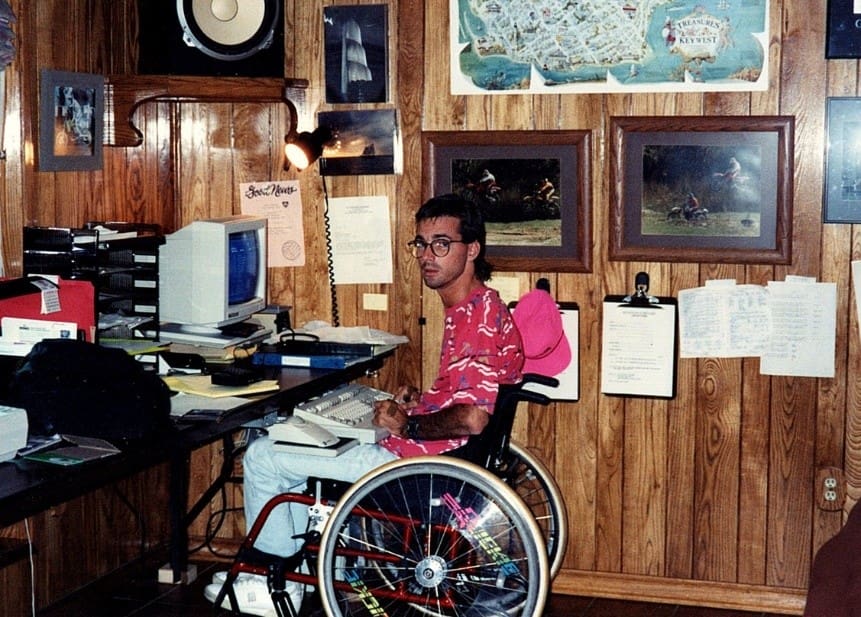
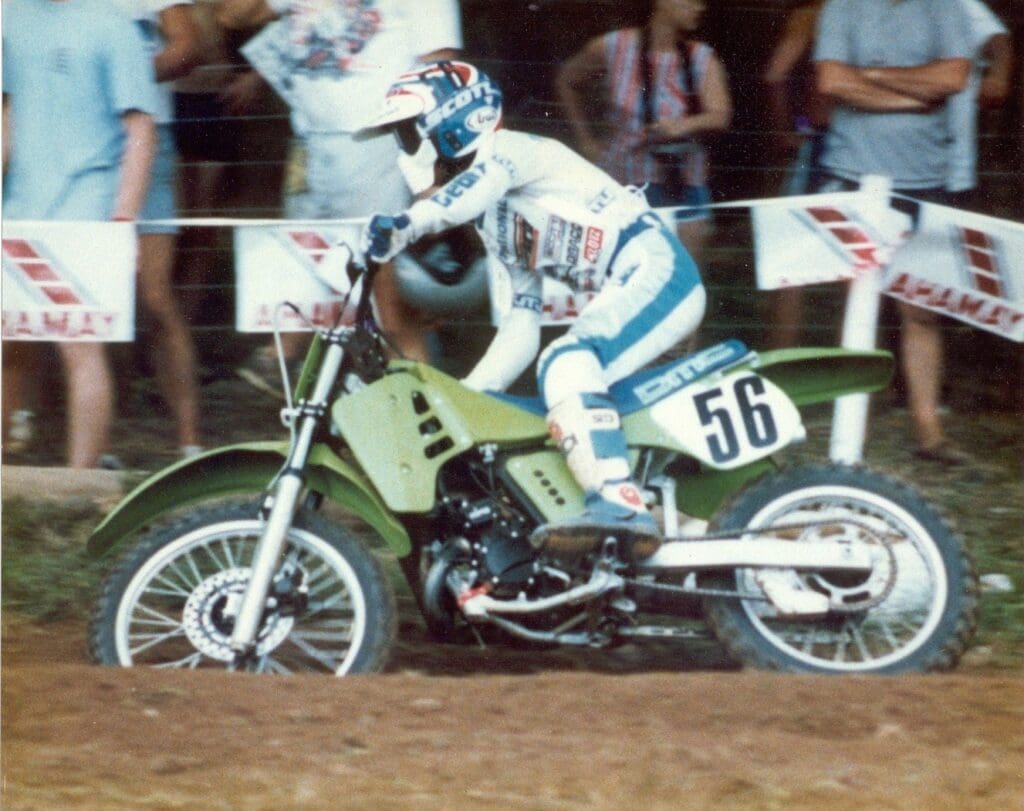
Growing up in the countryside near San Antonio, Texas, Hargroder developed a knack for mechanics early in life, inspired by his father’s construction business and his love for motorcycles. Hargroder’s life took a dramatic turn at the age of 19 when he sustained a spinal cord injury in a motocross accident on June 11, 1986 — a date forever etched in his memory. “Bad stuff happens fast,” he said, “I knew in a second, my life had changed forever.”
Following his injury, Hargroder spent considerable time in rehab, which he now reflects on as a crucial period for his recovery. With the strong support of his family and friends, he emerged with a steadfast resolve to adapt. “For a guy in a chair, I have it probably as good as anybody can,” Hargroder said. “But I’ve worked my butt off to be here!”
Drawing on his natural mechanical inclination and the knowledge he gained from years spent around his father’s construction company and racing buddies, Hargroder began modifying equipment to enhance his independence. What started as a necessity to adapt to his new life evolved into a business idea. “People started asking, ‘Hey, where did you get that? Can I get one?'” This type of interaction sparked the inception of Accessible Designs Inc. in 1993, founded in Hargroder’s parents’ garage.
Over two decades, Hargroder transformed Accessible Designs Inc. into a leader in wheelchair mobility. He introduced several industry firsts, such as carbon-fiber backrests and wheelchair disc brakes. “I don’t design for codes. I design for the users’ needs,” he said, emphasizing his commitment to functional innovation. Hargroder’s products always focus on improving the user experience, a testament to his understanding as a wheelchair user.
After selling Accessible Designs Inc. to Stealth Products in 2015, Hargroder spent four years working with Stealth R&D. In 2022, Hargroder founded Soul Mobility Inc., a company dedicated to continuing his mission to bring user-inspired designs to the mobility market. The Soul Mobility Inc. flagship product, the Power-Flex, transforms manual wheelchairs into lightweight power chairs in less than 30 seconds, without tools or adapters, giving users the flexibility to choose their mode of mobility based on their needs.
“I pushed a manual chair full time for over 35 years,” Hargroder said. “Even with the best equipment in the world, pushing a wheelchair is hard.” This common challenge faced by many wheelchair users inspired him to close the disparity between the need for power assistance and the desire for a more compact solution that aligns with his active lifestyle. “Many manual users don’t want to shift to a large power chair because it disrupts their lifestyle and environment,” Hargroder said. “Throughout my life on wheels, I have experienced firsthand the gaps in the wheelchair industry and have been blessed with the mind and ability to design solutions to fulfill my needs and the needs of many other wheelchair users worldwide.”
Despite his success, Hargroder has encountered significant barriers in his ongoing quest for innovation. “The Food and Drug Administration’s regulatory process for bringing new technology to the mobility market, while partially necessary to ensure the users’ safety, is overly complex and a huge burden in time, fees and resources for companies. This process stifles or even kills a lot of great innovations within the start-up ecosystems. And after a company survives the regulatory process, they face another significant barrier to innovation — the daunting and often unclear path of reimbursement and navigating HCPC (Healthcare Common Procedure Coding System) codes,” he said. “The health care industry has to be the only industry I can think of where consumer demand for a product can be exceptionally strong, but if CMS (the Centers for Medicare and Medicaid Services) doesn’t have an existing code or adequate reimbursement, it will fail and not be made available to the end consumers needing it the most! If we want to truly support innovation, there is an urgent need for reform in these areas to facilitate the emergence of new ideas and new companies.”
Hargroder’s work at Soul Mobility Inc. is not just about products; it also advances a broader mission to improve access, inclusion, and independence for wheelchair users globally at work, school and home. For the past five years, as an adjunct faculty member at the University of Pittsburgh School of Rehabilitation Science and Technology, Hargroder has shared his industry insights and lived experiences with students, shaping the next generation of innovators.
“I try to encourage students not to overthink a problem, hoping to instill a sense of creativity that can transcend barriers,” he said. “Students often bring fresh perspectives to challenges I’ve encountered in my own life.” Hargroder encourages his students to brainstorm and experiment, leading to innovative solutions that can be implemented in real-world applications. “Because of my limited hand function, one student saw the need to design a custom drawer pull for me that made a significant difference in my daily life.” These interactions not only provide valuable learning experiences for the students but also inspire Hargroder in his own endeavors. “It’s a two-way street — I feel I’ve learned as much from them as they might have learned from me.”
Reflecting on his own journey, Hargroder recognizes the importance of collaboration and community engagement. He is a firm believer in the power of shared experiences. “We can only make a difference if we show up,” he said, highlighting his participation in events like the recent NCART, U.S. Rehab and iNRRTS Washington, D.C., Congressional Fly-In, meeting with representatives from the House and Senate to advocate for crucial issues affecting the complex rehab industry.

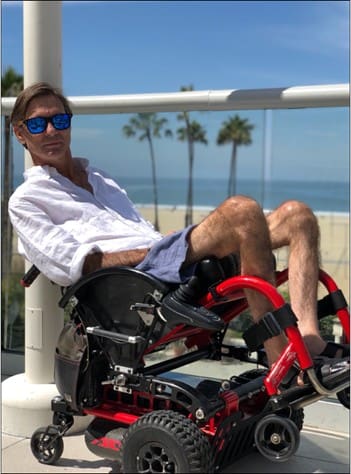
Hargroder seeks to balance work commitments with his life needs. In his free time, he enjoys road trips through the Texas Hill Country and down to the beaches, as well as the adventure of traveling throughout the Caribbean, where he can enjoy the warm atmosphere. Music is another passion, as he enjoys immersing himself in Texas’s diverse music scene. Living along the San Antonio River, Hargroder takes advantage of his surroundings and can roll right out to enjoy the local sights, sounds and vibrant community interactions. “San Antonio is that big city with a small-town feel.”

Innovation Summit award.
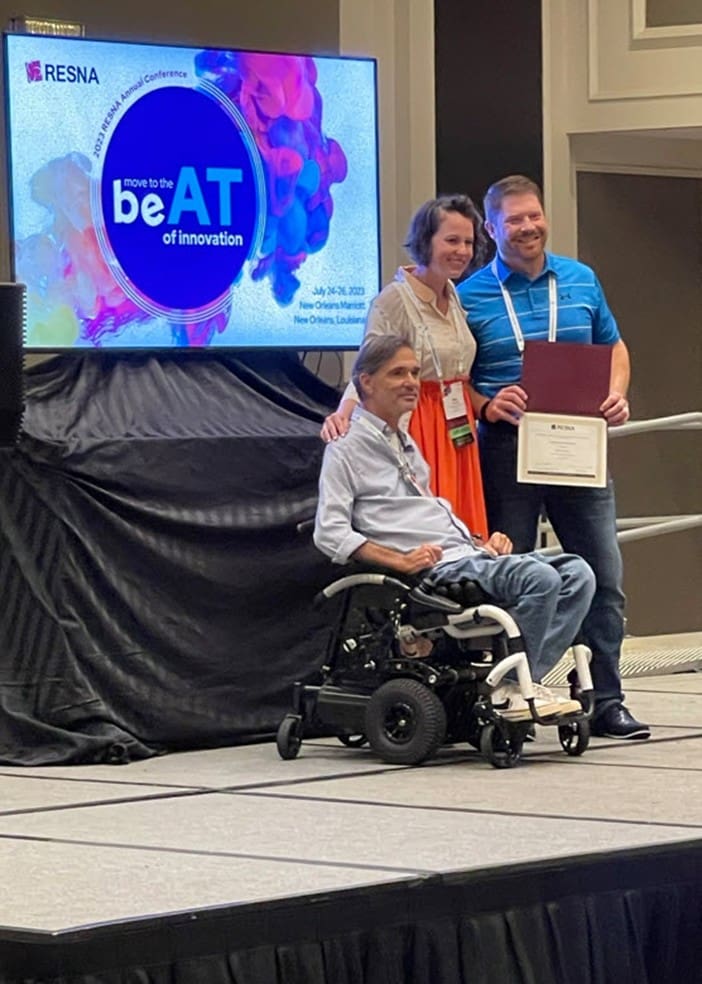

A dedicated and dynamic entrepreneur, Hargroder’s reputation is built on an unwavering optimism and a commitment to solving problems. His philosophy is straightforward: “You don’t get over it; you get through it.” With each innovative product and initiative, Hargroder continues to exemplify the spirit of determination that defines his life and work, inspiring many individuals within and outside the disability community.
In the coming years, Hargroder plans to expand Soul Mobility Inc. and its impact on the mobility industry, leveraging his experience and insights to empower others. “If we can’t do it, who can?” he said, embodying the tenacity that characterizes his entrepreneurial journey.
As he approaches his 59th birthday, Hargroder carries with him the lessons learned from a life spent on wheels. In his world, innovation is not just making a product; it is a testament to resilience and ultimately redefining the possibilities for wheelchair users around the world.
Todd may be reached at todd@soulmobility.com

Todd Hargroder, who lives in San Antonio, Texas, is an entrepreneur and innovator in the wheelchair mobility industry with over 35 years of experience. After a spinal cord injury, he founded Accessible Designs Inc., which became a global leader in adaptive products. After selling the company in 2015, Hargroder founded Soul Mobility Inc. (https://www.soul-mobility.com/), focusing on creating innovative solutions such as the Power-Flex power-assist device for manual wheelchair users. He is also an adjunct faculty member at the University of Pittsburgh School of Rehabilitation Science and Technology.