

Sponsored by Ride Designs/Sunrise Medical
Creative contributions by Faith Brown, OT Clinical and Education Specialist Sunrise Medical UK
Abstract
This case study presents the seating and mobility journey of Glenda, an 80-year-old woman with severe postural asymmetries, who had been unable to leave her bed for over four years. Using Ride Designs custom AccuSoft seating and a Quickie Iris tilt-in-space base, she was able to rebuild her upright tolerances and participate in life roles out of bed. As a result, Glenda mobilizes throughout her home environment daily, demonstrates improved head control and has improved participation in activities.
Background
Glenda* is an 80-year-old woman who lives in a scenic part of Wales, Great Britian, in a residential facility converted from a large historic manor house. She has always lived in highly supported environments due to difficulties related to lumbar level spina bifida and intellectual developmental disabilities. Her home has a range of daily activities and trips to the local establishments. Even though she does not speak, Glenda communicates via movements, expressions and gestures, never hesitating to push away what doesn’t interest her.
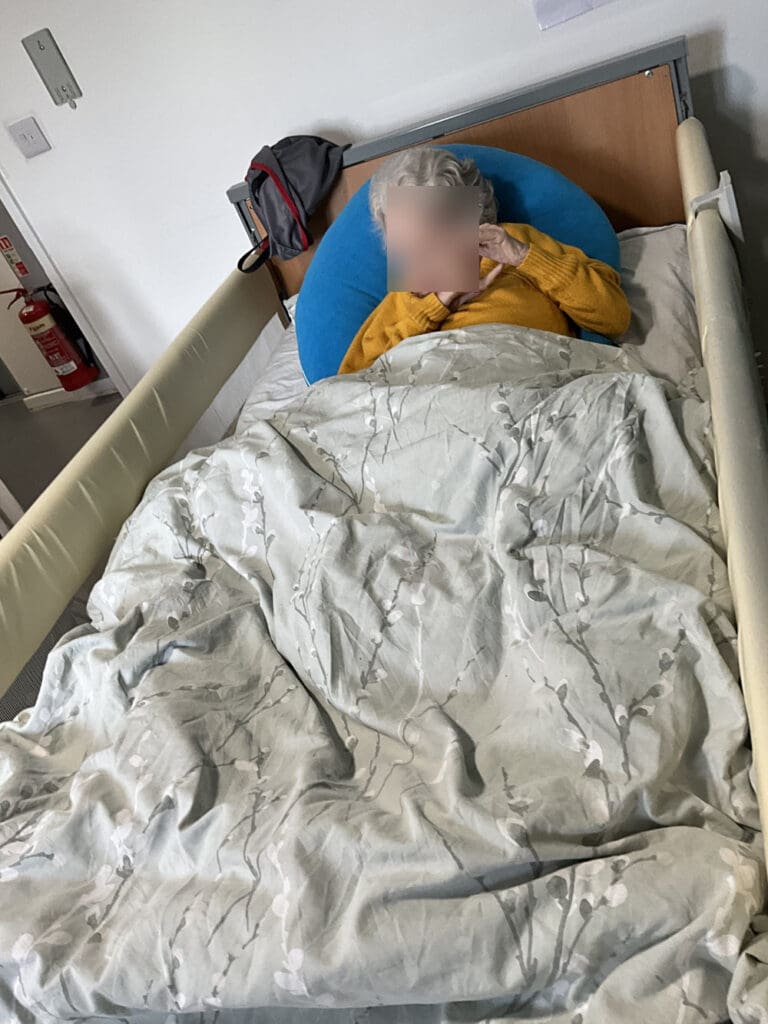
When she moved to her current home, Glenda was unable to sit out of bed safely as the facility did not have a mobility base to fit her unique posture. Glenda had been referred previously for a traditional custom-moulded carved foam seat, but this was abandoned at time of moulding because the size of wheelchair it would require could not fit through any doorway.
Current presentation and set up
Postural presentation: Significant mid-thoracic hyper kyphosis, with chin resting on her sternum. When optimally supported, she demonstrates active head movement with mild cervical extension and looks around her environment. She rests with her shoulders flexed and internally rotated with elbow flexion and demonstrates volitional movement in both arms, with more strength and control on the left.
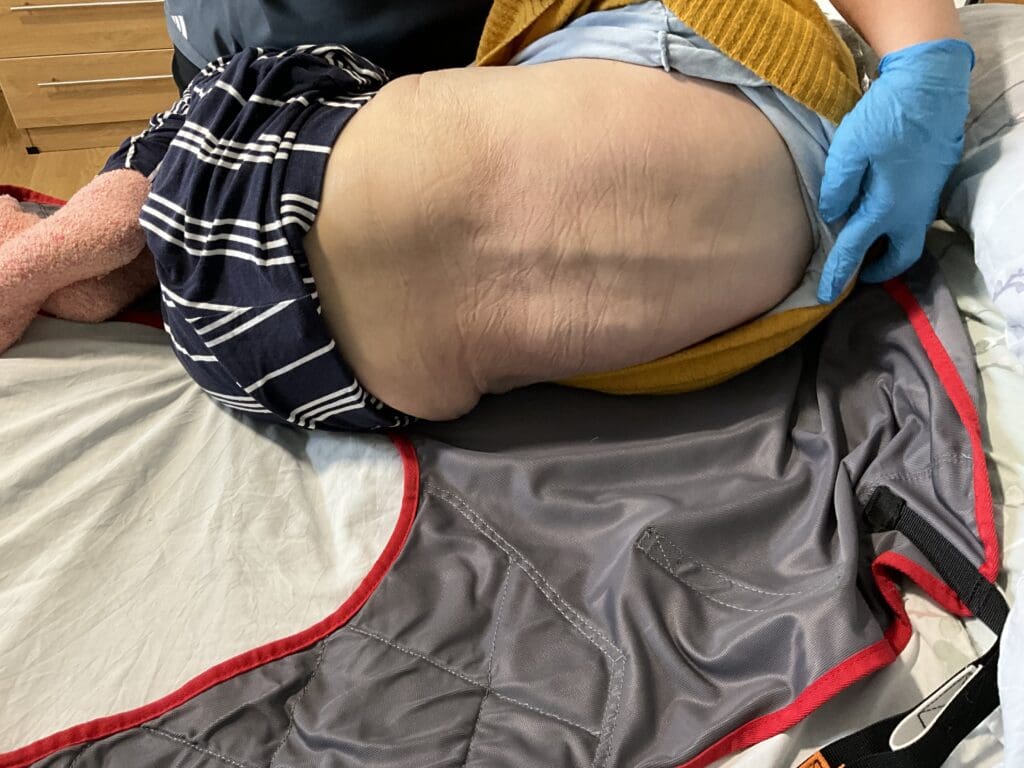
Her pelvis rests in a right pelvic obliquity and a mild/moderate spinal curvature concave to the right. She has high tone and underlying contractures in bilateral lower limbs, dominated by wind-sweeping towards the left. Her left hip is more flexible, achieving approximately 10 degrees abduction at most corrected, but her right hip appears to be at least partially subluxed on palpation and in high levels of flexion, internal rotation and adduction, reaching grossly -20 degrees at most neutral position. Both hips have very limited extension. Hamstrings are tight bilaterally, with fully flexed knee position at rest in bed. She is reported to have recently started botulinum toxin injections to improve lower limb ease of movement and was noted to have progressive relaxing of knee flexion when sat in hoist.
Goals
- Enable wheelchair use daily to engage in social activities with other residents, access to garden, dining room, medical appointments and potentially leisure trips out.
- Improve head control and cervical extension for swallowing and to allow healing of Stage 1 pressure injury.
- Sit up in wheelchair daily for health benefits of being out of bed, including circulation, respiration and active movement.
Intervention
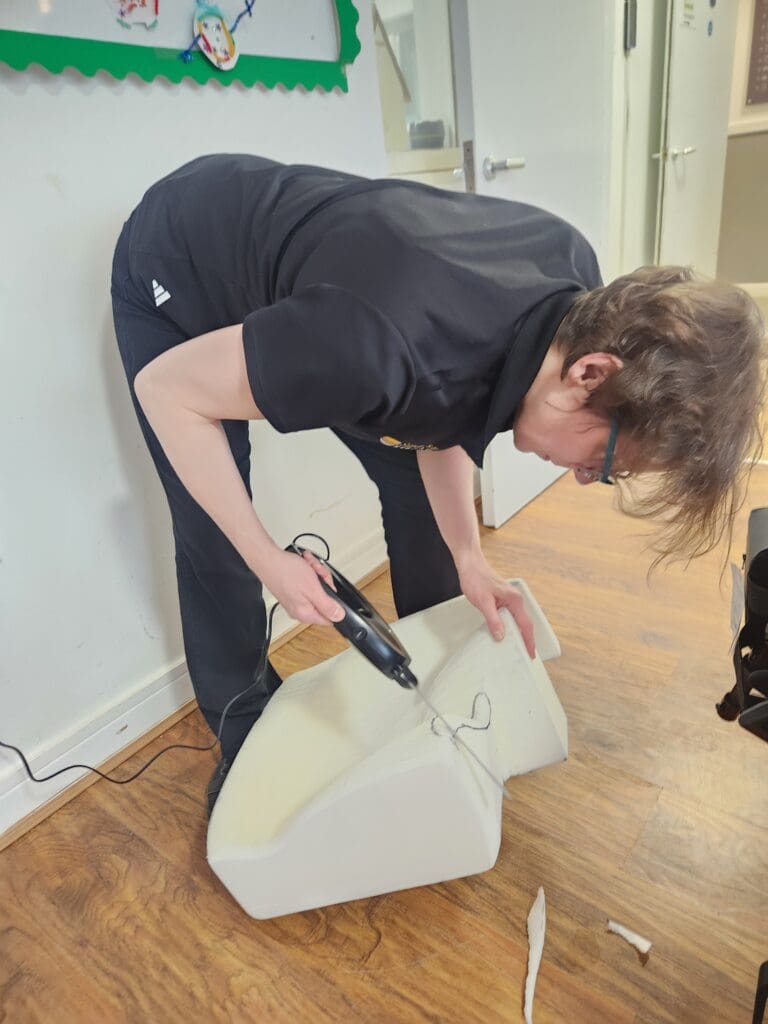
Glenda was moulded at her home using the Ride Designs small base and shape capture system;(2, 3) shape capture assessment, frontal view. Glenda demonstrated a positive response. A manual IRIS wheelchair was used as the moulding base, with the backrest recline set to a fully open position to accommodate her limited hip flexion and very tight hamstrings.
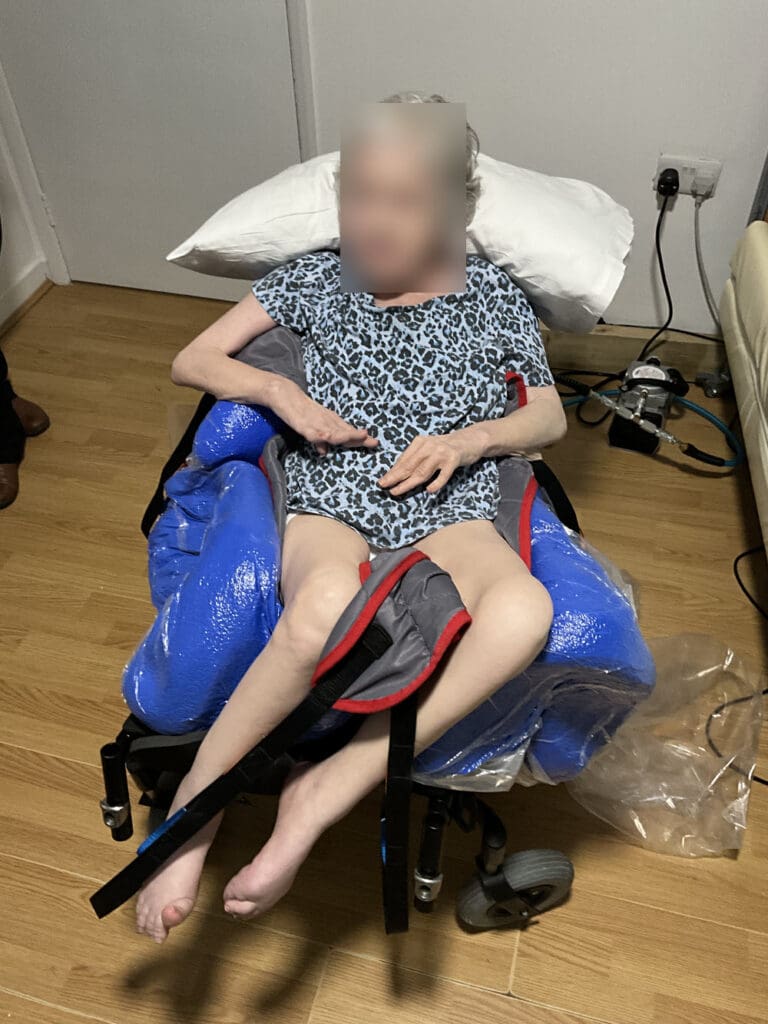

Key points of support were shaping to encourage spinal extension within range and accommodation of lower limb position. She sat in mould for approximately 15 minutes once the shaping was completed, and during this time showed relaxation of tone and lifted her head, maintaining the position for several minutes at a time in tilt.
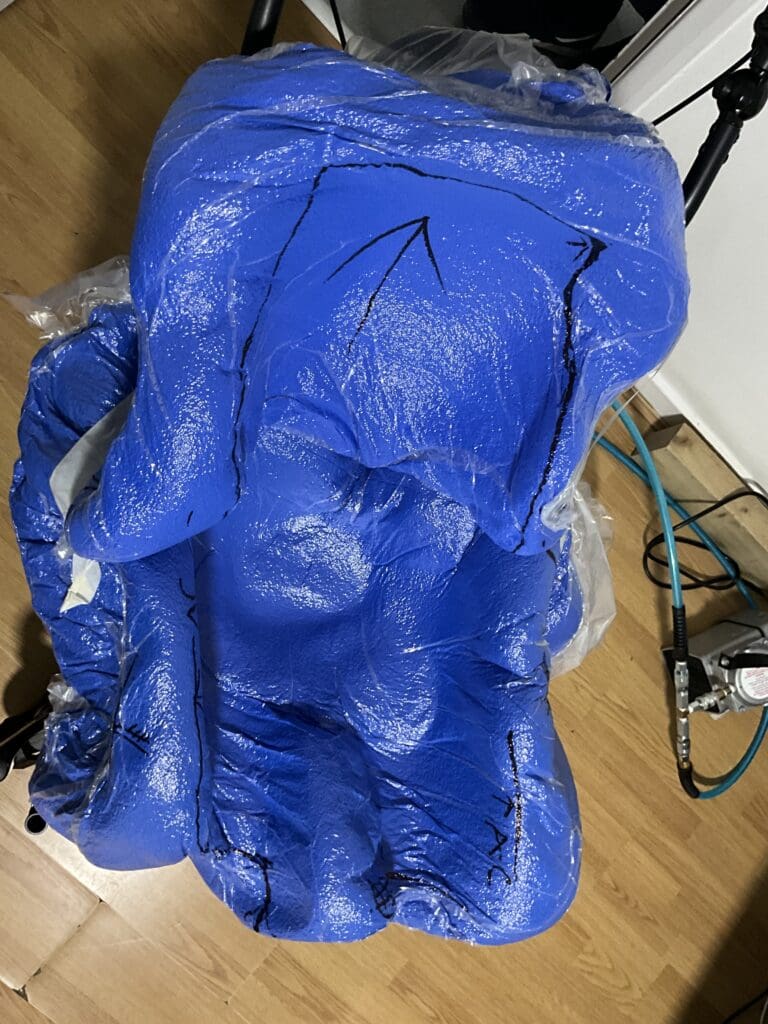
Overall anticipated size of TIS manual wheelchair base was confirmed against home environment. Measurements and turning radius information indicated that it should be able to access without difficulty.
Equipment and related components
Ride Designs Ride Custom Back with Accusoft foam liner and Ride Custom Accusoft Cushion.
An IRIS TIS base was used to achieve full 45 degrees of tilt if needed for effective offloading of pelvic area in the chair, as well as a compact turning base. This also allowed the use of Z-Finity footplates to support feet in necessarily rearward position due to hamstring contractures. The padded footplate cover portion of the JAY footbox was provided to protect feet for a client who does not tolerate wearing shoes.
Outcome
On day of delivery, we reviewed our plan of care, photos and goals. We set up all equipment per stated goals.
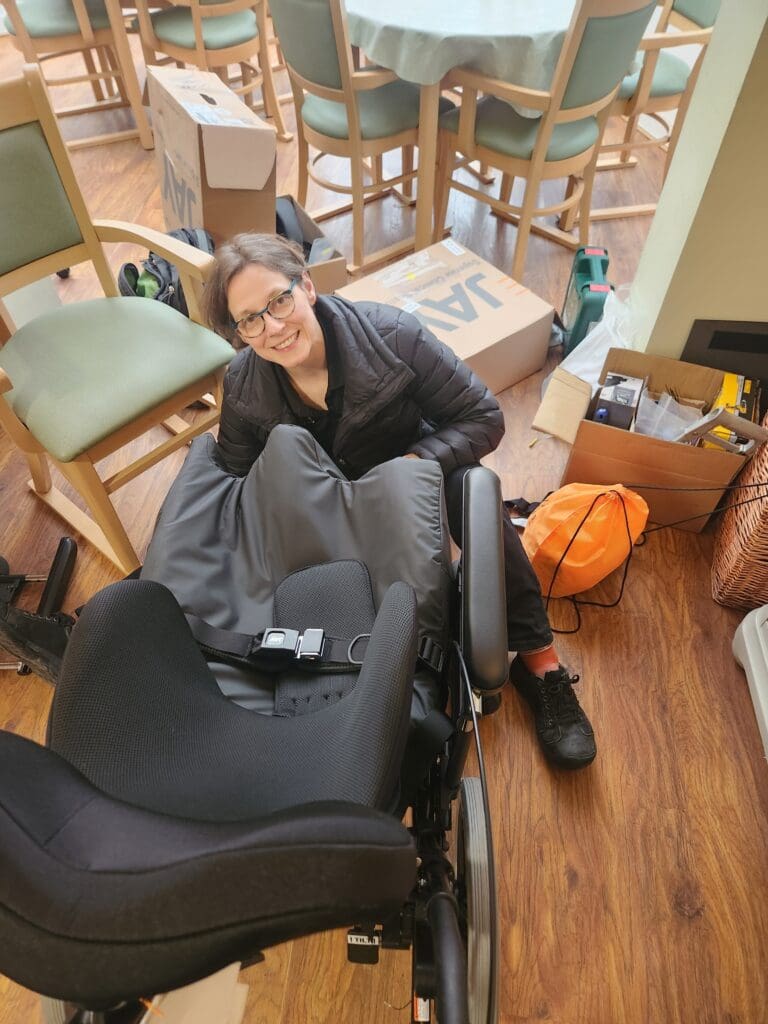
Minor modifications were made for optimizing fit.
Glenda spent two hours in her new seating and wheelchair. She travelled in the wheelchair into a large dining room at her residential home and met several residents for the first time.
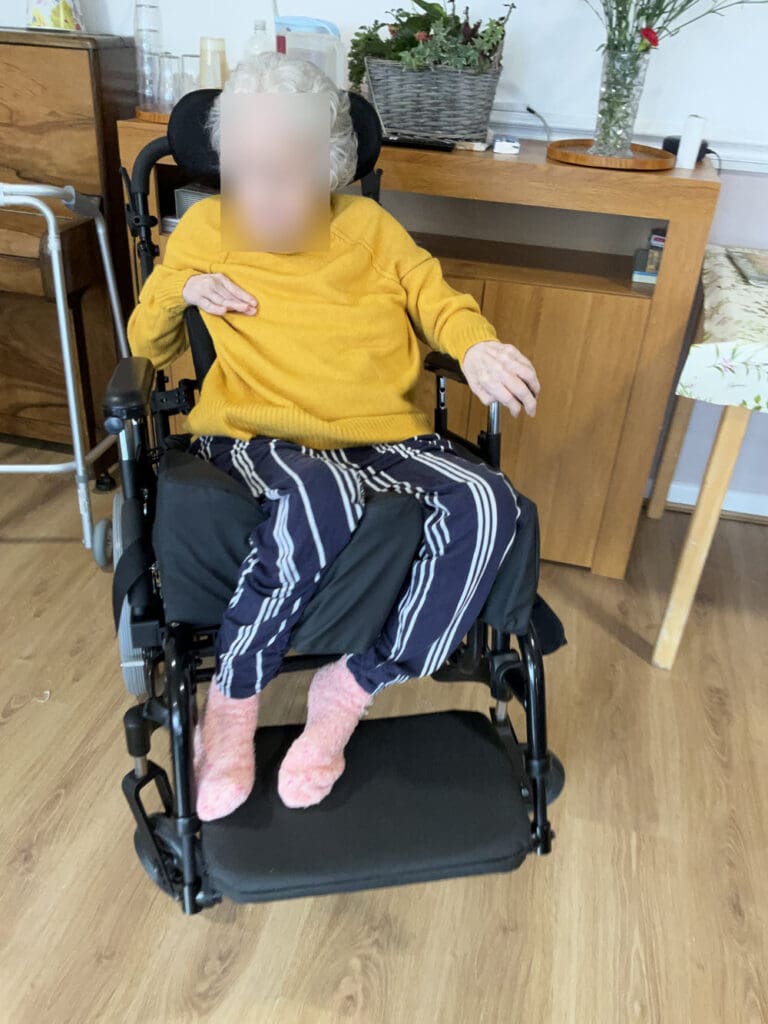
She was able to sit on the patio in the direct sunlight. Skin over her sacral, thigh and gluteal areas was checked before and after, with no signs of increased redness or marking.
She lifted her head several times and maintained the position for up to 10 minutes. Per staff interpretation, she showed no signs of fidgeting, facial expression or sounds that would suggest discomfort.
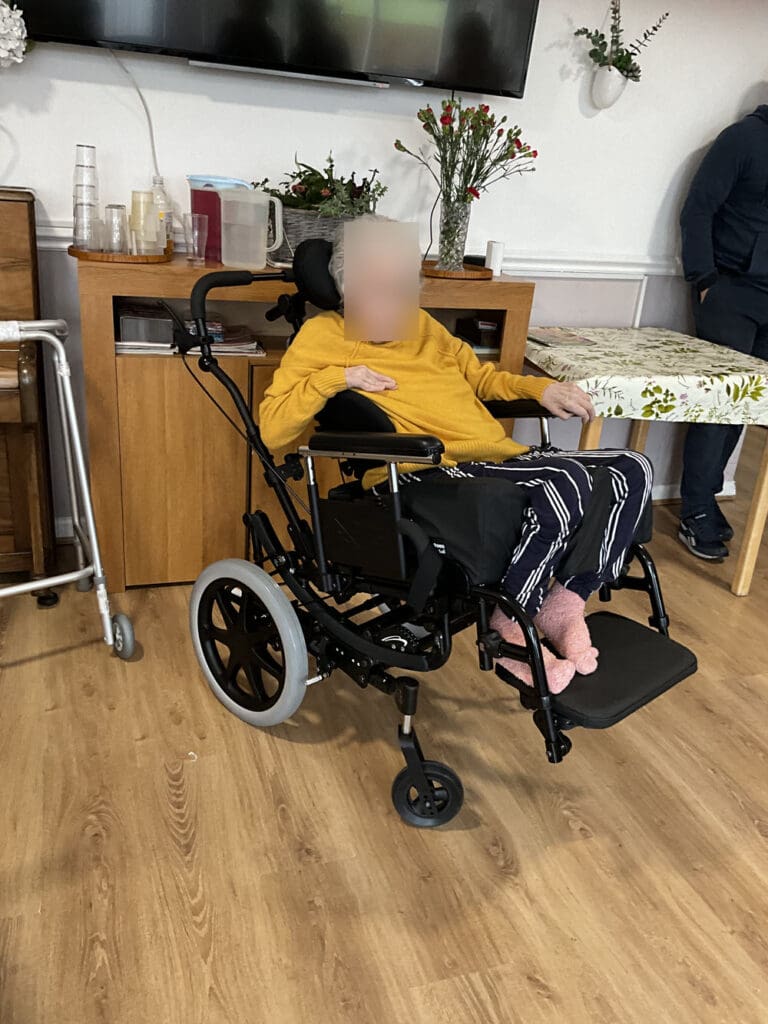
Glenda then progressed her time in the chair with skin checks, increasing by 30 minutes daily. In a follow-up conversation, her advocate stated she thought the new system was “wonderful.” Glenda now gets out of bed daily for several hours, participating in activities and interactions at her home. She continues to make gains in head control and the red mark on her chest has disappeared.
Recommendations
It may be possible to support clients to become mobile again with the right seating and wheelchair base, even with advanced age and previous long periods of bed rest.
Environmental considerations are a key part of determining the right seating.
For clients who have not been mobilizing for an extended period, a gradual approach is recommended to build stamina for wheelchair use. This client was able to increase wheelchair use in progressive increments, with regular review of skin.
Daniella may be reached at Daniella@ridedesigns.com.

Daniella Giles is currently the North American clinical education manager for Ride Designs. Over the past 15 years with Ride Designs, she has provided clinical guidance to physical and occupational therapists and Assistive Technology Professionals to produce custom seating solutions aimed at solving the most complex skin and postural support needs of wheeled mobility users. Giles received her Master of Physical Therapy in 2001 and completed her doctorate in 2019. With over 20 years of experience as a PT, she has diverse knowledge of treatment interventions aimed at allowing individuals with profound mobility challenges to thrive. She has presented the unique principles of Ride Designs orthotic seating to rehabilitation and durable medical equipment groups across the U.S., Canada and Europe.