

Julie Keon spends her professional life walking alongside people as they face mortality. As a psychotherapist, she supports individuals confronting terminal diagnoses, traumatic grief and the long shadow of caregiving. Her 2011 essay, “What I Would Tell You,” became the foundation for a widely acclaimed book, and she now teaches courses on death preparation and has trained in community-led death care.
Yet the role that shapes her most is not found on a resume. “More meaningful and important than all of my professional endeavors,” she said, “is mothering Meredith.”
Meredith Graham, now 22, experienced a lack of blood and oxygen to her brain during birth (hypoxic-ischemic encephalopathy) resulting in a diagnosis of severe cerebral palsy. She is non-verbal and medically fragile. Early on, Julie and her husband, Tim Graham, were told their daughter would likely not live past age 7 or 8. She has exceeded that life expectancy by more than a decade.
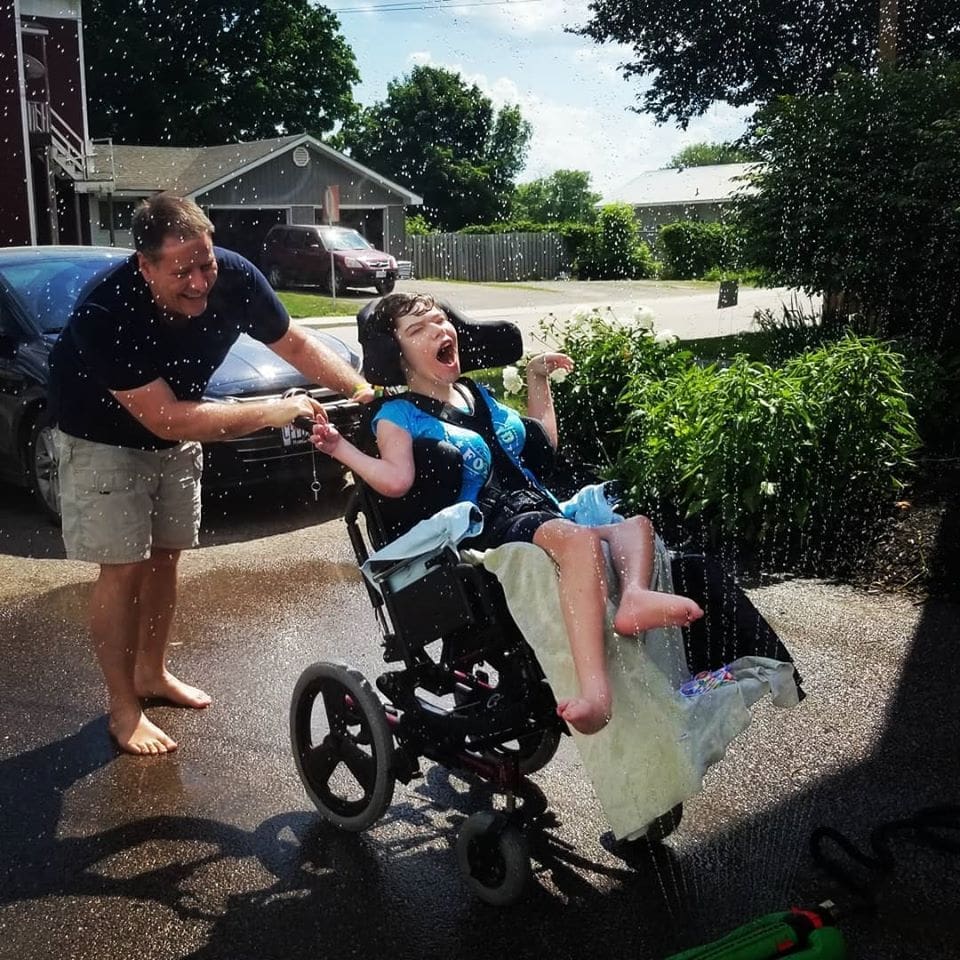


Her story is familiar in one critical way: Medical advances have outpaced systems. Children who once would not have survived are now young adults with profound and ongoing needs. Families are grateful, yet they are also navigating uncharted territory.
“When Meredith turned 18, she did not change. Her needs were the same, but everything relating to her care changed,” Julie said. “For 18 years, Meredith had been supported by pediatric specialists, children’s hospital teams and even a children’s hospice program. She is considered palliative, not because she is actively dying, but because she lives with a life-limiting condition.”
Then she aged out. “It felt like we were starting over again,” Julie said. “All of the care teams and systems we had in place for the first 18 years of her life were suddenly cut off because she was no longer a child.”
For many families, this transition is abrupt and destabilizing. The pediatric system is often coordinated and family-centered. Adult systems can be fragmented and less prepared for individuals whose needs begin in infancy.
Julie and Tim had something many families struggle to secure: an established team and documented severity of need. Because Meredith’s care is so complex, funding and adult supports have, somewhat ironically, improved. “As Meredith gets older and as we get older,” Julie said, “the understanding is that she will do best if she is at home. And, in order to be at home, we need to have consistent help in place.”
At this time, a night nurse allows Julie and Tim to sleep. Daytime caregivers help so both parents can work. But the safety net remains thin. “If a night nurse cancels,” Julie said, “We suddenly have to pull an all-nighter. It doesn’t matter what I have scheduled the next day. If I have a full day of clients in clinic, I still must see them, and Tim still has to go to work.”
Julie and Tim are, as Julie puts it plainly, “the contingency plan.”
Some of the most transformative changes in Meredith’s life came through equipment and positioning. Before custom seating and skilled therapists improved Meredith’s tolerance for positioning, Julie or Tim spent the entire day with their daughter in their arms, supporting her body. “For the first eight and a half years, Meredith would not tolerate sitting in a wheelchair,” Julie said. “She would go completely rigid and start screaming indefinitely.” When experienced therapists gained an understanding of Meredith’s body and sensory profile, and when custom seating was introduced, life changed drastically for the young girl. That experience clearly illustrates the power of proper seating, positioning and patient-centered problem-solving. Now Meredith, who weighs about 95 pounds, can sit comfortably in her wheelchair throughout the day. “That changed everything,” Julie said. “I wouldn’t be able to hold her all day now.”
When Meredith was born, a social worker in the neonatal intensive care unit pulled Julie and Tim aside. “You two need to really communicate,” she told them. “A lot of marriages don’t survive this.” At the time, Julie could barely think beyond pumping milk and learning how to feed her newborn through a tube. Marriage felt secondary to survival.


Tim and Julie will celebrate 27 years of marriage in June. “We are very strong and happily married,” Julie said. “I’m very proud of our marriage and proud of our little family.”
That strength did not come without strain. Grief arrived in waves, and not always at the same time. “There were periods where I was hit with a whole lot of grief for all the things we had lost,” Julie said. “And Tim would be trying to focus at work, but worrying about what was happening at home. Then, he would have his own period of insomnia or depression. It’s not linear. You don’t both grieve at the same time.” They learned to take turns. “This is my week,” Julie jokes, “Tim can have next week.”
The couple sought therapy and made their marriage a priority in small, consistent ways. An hour each evening between Meredith’s bedtime and the night nurse’s arrival becomes sacred space. There are no phones, just conversation. In winter, Julie and Tim snowshoe in a nearby forest. Occasionally, they stay in a nearby hotel for a couple of nights. “We’re really good friends,” Julie said. “We love being together.” They are also very motivated to stay well. Julie works out at 5 a.m. after Tim leaves for his hour-long commute to work in information technology for Canada’s Department of National Defense, and Meredith is sleeping. Strength-training is a necessity because Julie knows she may be caregiving for decades to come. The couple prioritizes sleep. They do not drink alcohol because it disrupts rest. These strategies serve them now and help sustain them for the long term.
Isolation, Julie believes, is a real threat to the well-being of caregivers. She urges other parents of medically fragile children to “find your community, even if it’s one other parent who understands your life. You need that as much as you need food, water and air. You can take advantage of online groups, virtual meetings and even shared stories across continents. But community requires courage. It takes a leap of faith to expose yourself and find your people,” Julie said. “But it is necessary for survival.”
The reality of the caregiving experience can be lost in statistics and system gaps. There is exhaustion. There is anxiety. There is grief for what might have been and a fear of what is to come. There is also joy. Meredith brings “tremendous joy and pride,” Julie said. “We just can’t imagine any other child for us.
“When Meredith was young, our fear was that she would die. Now, a new fear has taken its place. The fear of our daughter outliving us.”
For parents of medically complex adults, this is the quiet terror. Advances in neonatology, pediatric critical care and Complex Rehab Technology have changed survival rates. But residential models, long-term funding streams and adult systems have not evolved at the same pace.
In a recent blog post titled “Contingency Plan,” Julie confronted the question: What happens if she and Tim die before Meredith? An answer to this prodigious question came when Julie’s sister read the post and sent a message. If something happened, she wrote, she would retire early and, together with Amanda, the family’s longtime caregiver, take over Meredith’s care.
“Amanda has been with our family 20 years,” Julie said. ‘It is very rare to have someone that dedicated for that long.”
The message from Julie’s sister was reassuring and also a call to action. “I realized that I need to update the “Meredith Care Manual” with more detailed instructions,” Julie said. “If something were to happen suddenly, others would need to know how we pay the workers, who to contact for supplies, how everything works.”
Julie’s reality of the need for this information broadens the transition-planning conversation: transition is not just from pediatric to adult systems. It is from parent-led care to whatever comes next.
As plans for Meredith’s care if she outlives them begin to take shape, Julie and Tim live with a quieter, harder truth that underlies their daily life: Their daughter is likely to die before them. Julie has written candidly about preparing for the death of a child in her book, “What I Would Tell You.”
“No amount of begging, negotiating or praying will chase death away,” Julie said. “It is a reality for everyone and everything that lives. For now, Meredith is oblivious to what is to come, and I choose to meet her where she is. We will accompany her along her life for as long as she has.”
Julie refuses to let fear consume the present. “When I find my worry starts to accelerate,” she said, “I come back to this truth: In this moment, all is well.”
Julie may be reached at julie@readyornoteol.com
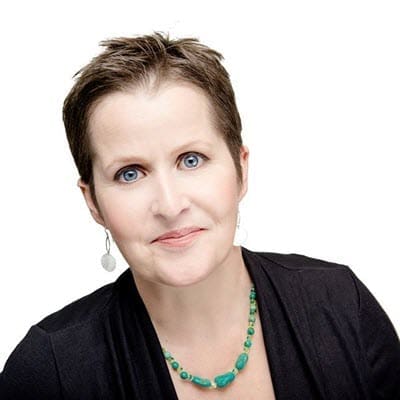
Julie Keon is many things: a Psychotherapist, certified Life-Cycle Celebrant, end-of-life doula, death educator, published author and most importantly, a mother to her daughter, Meredith, who is medically fragile. Her book, What I Would Tell You~ One Mother’s Adventure with Medical Fragility, offers insight and perspective for those who are raising a medically fragile child and for the professionals who care for them. Julie lives with her husband, Tim, and their daughter, Meredith, in the Ottawa Valley of Ontario, Canada. (https://whatiwouldtellyou.com/)