


Pediatric therapy isn’t just about helping kids with independence and mobility, at least not to Ashley Schilling. For her, it’s about helping families live together fully and on their terms. And sometimes, the best way to do that is by putting a child on an adaptive bike.
As a pediatric physical therapist, university professor and national advocate for adaptive mobility, Schilling brings high energy and deep purpose to every role she holds. Whether she’s mentoring students, collaborating with engineers or fitting a child for an adaptive bike, her approach centers on one unwavering principle: families should always be in the driver’s seat. This proven lesson surfaces time and again, shaped by the therapist’s experience and introspection.
Schilling, PT, DPT, PCS, always thought she’d become a pediatrician. Medicine fascinated her, and she had a natural draw toward children. But somewhere among MCAT prep and medical school interviews, Ashley had what she calls a “gut check moment.” Her goal wasn’t just about treating children; it was about helping them move, thrive and participate in life alongside their families. That realization would eventually shape every aspect of her career.
During her time at Iowa State University, Ashley discovered her true path. Encouraged by a health professions counselor shadowing a variety of clinicians, she found herself watching Division I athletes train under the guidance of a physical therapist who did more than help with injuries — he educated, motivated and built lasting relationships.
“That’s when it clicked,” Schilling said. “I saw what it looked like to truly partner with someone in their care. I remember thinking, ‘I want to do that with kids and families.”
Schilling pivoted from pre-med to physical therapy, eventually earning her doctorate from Washington University in St. Louis. Clinical rotations at institutions like St. Jude Children’s Research Hospital and the Shirley Ryan AbilityLab introduced her to complex care environments, laying the foundation for what would become her guiding principle: every decision, every intervention and every recommendation should include what matters most the patient and to the family.
Listening first
Early in her career, Schilling approached therapy with a goal-oriented mindset, focusing on outcomes, milestones and mobility benchmarks. However, over time, a significant shift occurred.
“The most effective teacher throughout my career has been listening to families,” she said. “At first, I approached equipment recommendations from a therapist-centric view. I wanted the child to walk, so I prescribed what would help them walk. But I wasn’t asking what the family wanted or could realistically accommodate.”

A turning point came during her work with a young boy with cerebral palsy whose family’s main goal was for him to walk. Although Schilling could see the potential benefits of a manual wheelchair — greater independence, less fatigue and more peer interaction — the parents weren’t ready. Years later, when the patient and his mother visited Schilling’s student lab at the University of Tennessee in Chattanooga, the boy was using a wheelchair and thriving. His mother shared with the physical therapy students that her son had described using the wheelchair as feeling “free.”
“That moment really stuck with me,” Schilling said. “It made me wonder if I had asked different questions earlier, could he have felt that freedom sooner?”
Today, she embraces what she calls “the power of ‘and’ over the tyranny of ‘or.’” A child can have both a walker and a wheelchair. A family can pursue strength-building goals while also prioritizing playtime. “We need to empower families to know it doesn’t have to be either/or,” Schilling said. “Let’s figure out how to make both happen.”
Schilling’s approach to problem-solving is collaborative and refreshingly unbound by discipline. Her husband, Kyle Schilling, a mechanical engineer, is a key creative partner in designing adaptations for equipment that doesn’t quite fit her “unique little humans.”
“I’ll dream something up in my head, and Kyle will make it happen. Honestly, I am sometimes jealous of how engineers think. They have access to materials and tools and a totally different perspective.” Schilling believes the best solutions often come from outside the field of rehabilitation. “We may not speak the same language, but there’s real value in that reality. We need to ask for outsider views more often.”

Delivering access, inspiring movement
That philosophy has served Schilling well in another deeply invested endeavor — her leadership with AMBUCS. The physical therapist’s connection to the nonprofit organization began in 2010 when she and her husband helped found a Nashville chapter. The group provides adaptive tricycles and bikes to children and adults who need customized mobility solutions.
“The first time we gave a bike away, I was overwhelmed,” Schilling said. “I love riding my bike. It brings me joy and freedom. I realized then that everyone deserves access to that experience.”
She saw children who had never moved independently light up as they pedaled for the first time. Adults rediscovered mobility they thought was lost. Disabled veterans regained a piece of their independence. “It’s not just about physical therapy goals,” Schilling said. “It’s about life.”
As her involvement with the AMBUCS organization deepened, Schilling realized a significant gap. While therapists certainly believed in and supported the benefits of adaptive cycling, there were no clear guidelines for evaluation and fitting. So, she wrote them.

Schilling’s informal guidelines, initially developed for her local chapter, grew into a national continuing education course for therapists. She presented it across the country, and then created a virtual version, now available through the AMBUCS website. The course walks clinicians through evaluation strategies, fitting techniques and, true to her philosophy, how to listen to families throughout the process. (https://AMBUCS.org/amtryke-evaluation-and-fitting-for-therapists/)
“A 7-year-old isn’t going to tell you their bike helps their range of motion,” Schilling said. “They are going to tell you how much fun it is. That joy is therapeutic in itself.”
As the current AMBUCS Amtryke Director of Education, Schilling continues to advocate for what she calls “participation-focused outcomes.” She asks families questions such as how often their child now plays with friends and how many times they have gone to the park since getting an adaptive bike. These are the stories that, paired with clinical data, will build a case for insurance coverage and long-term support. “An adaptive bike isn’t just a ‘nice to have’ anymore,” she said. “It is a must-have.”
All in, all the time
In addition to her national role with AMBUCS, Schilling is an assistant professor of physical therapy at the University of Tennessee at Chattanooga, where she also holds the Sharon Vanderbilt Professorship in Pediatric Physical Therapy. She practices clinically at Erlanger Children’s Hospital and is board-certified in pediatric physical therapy.

Balance
Somehow, Schilling balances all this while parenting two young children, training for endurance races and enjoying outdoor adventures with her husband and their rescue dog, Sandy.
“Being outside with my family, that’s what I love,” Schilling said. “We like the mountains, the beach, and Kyle and I have both done half-Ironman races.”
Despite her packed schedule, Schilling’s energy is constant. She credits her drive to the families who trust her with their children’s care.
“They’re the reason I keep learning, keep growing,” she said. “They remind me what matters most.”
If a child feels joy on a bike, that’s not extra — it’s essential. For Schilling, mobility is about more than movement; it’s about connection, freedom and participation.
And when a family gets to say, “We did this together,” that’s when therapy becomes much more than a plan of care.
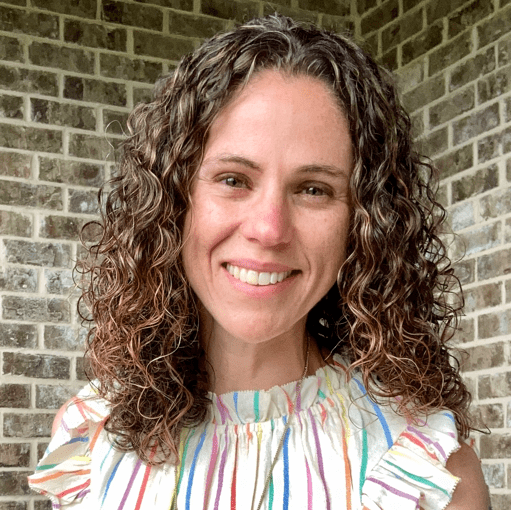
Ashley may be reached at Ashley Schilling at ashley-schilling@utc.edu.
Ashley Schilling, PT, DPT, PCS, is an associated faculty member and pediatric content lead, for the Department of Physical Therapy at the University of Tennessee at Chattanooga. She is also a pediatric physical therapist for Erlanger Children’s Hospital. She has established a post-graduate continuing education course on adaptive bikes for physical and occupational therapists. She leads this program as the current Amtryke Director of Education for AMBUCS, a national nonprofit organization that inspires independence and mobility by providing adaptive bikes to children and adults with disabilities. (https://AMBUCS.org/)